How to remove oil stains

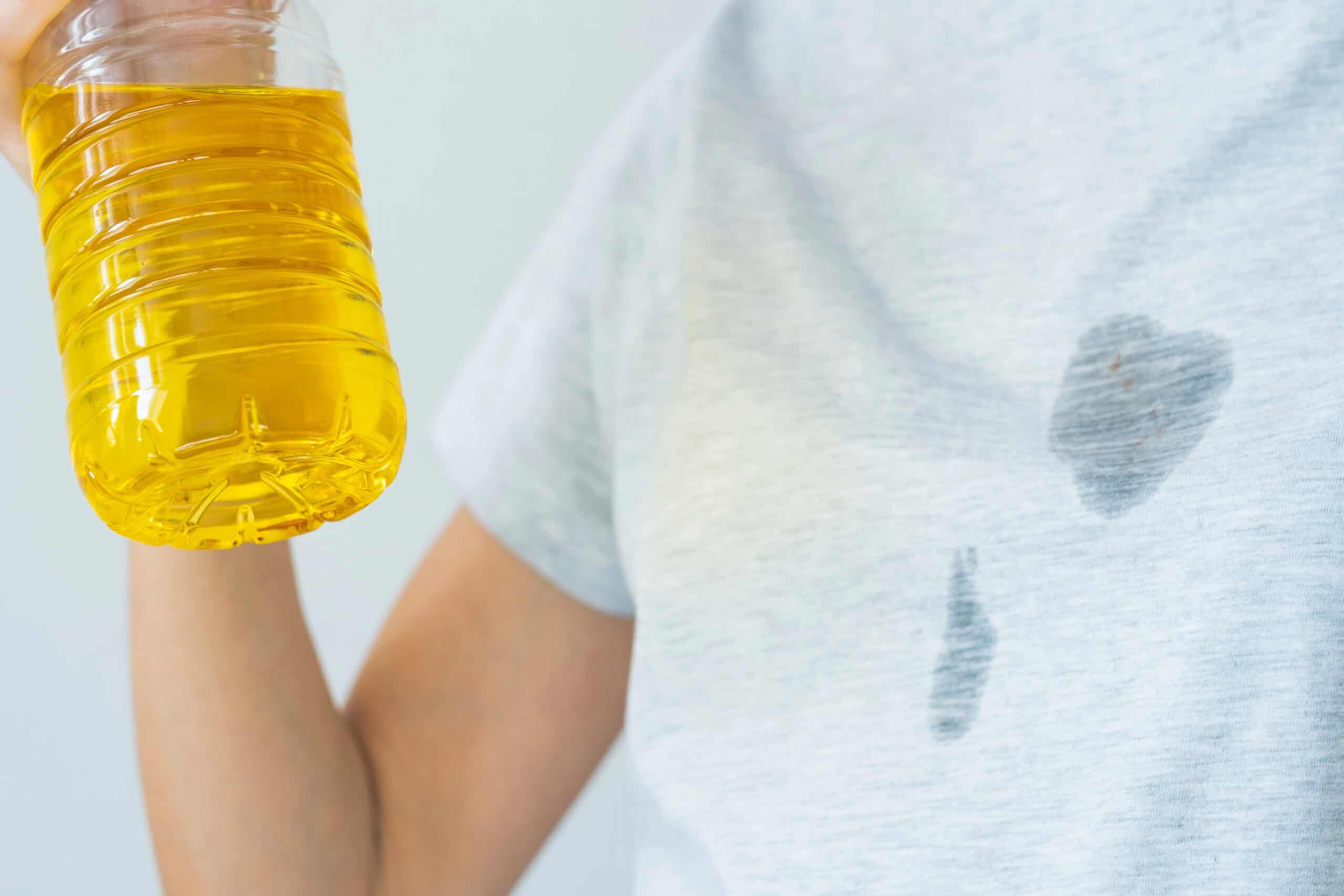
Oil stained clothes are often difficult to treat. Whether it’s a smear from a bike chain, a greasy thumbprint on your work shirt, or a mystery mark caused by the washing machine, it can send the best of us into a panic.
To successfully remove oil stains, first blot away the excess oil, lay a clean white cloth underneath the stain and apply a stain remover designed for either mineral or food grease stains, depending on what you’re up against. Always blot, never scrub. Repeat the process if necessary. Only once the stain is lifted, wash as normal.
Below, we’ll share more about how oil behaves, a method that works on fresh stains and dried marks, which products to use, and the mistakes to avoid.
What causes machine oil stains?
Marks that weren’t there when the clothes went in the washing machine are usually caused by one of two things.
The most common culprit is a build-up of residue from detergent and fabric softener. It can go waxy over time and often redeposit itself on clothes, showing up as greasy grey smears, even on darks.
To avoid it, ensure you keep your washing machine clean and use the right dose of detergent for each wash. Run Service-it Deep Clean Washing Machine Cleaner every 1-2 months to clear the build up before it affects your laundry.
Some oily stains are due to a mechanical fault. Worn drum bearings and failing seals can let lubricant escape, leaving dark, oily streaks on your clothes that don’t respond to a pre-treatment. A grinding or rumbling noise during the spin cycle is another giveaway, and it’s worth giving an engineer a call.
Why is oil difficult to get out of clothes?
Oil can be a tough stain to remove, as it soaks into fibres rather than sitting on top of them and repels water. A normal wash struggles to tackle it without pre-treatment.
That’s why speed, good technique and the right products make a big difference. Fresh stains are still near the surface of the weave and often lift easily if treated properly before they go in the wash. Old stains have worked deeper and begun to oxidise, which darkens them and makes the job harder, though not necessarily impossible.
Step-by-step guide to getting oil stains out of clothes
- For wet stains, blot any surface oil first with a clean paper towel or light coloured cloth. Always dab and never wipe or scrub. Rubbing spreads oil sideways and pushes it further into the weave, and you’ll end up with a fainter but larger mark. Dabbing draws the liquid up into your cloth.
For dried on stains, use the edge of a spoon to remove hardened residue.
- Next, lay the garment flat and slip a clean white cloth or saucer underneath the stained area
- Lay the garment flat and slip a clean white cloth or a saucer underneath the stained area, so the oil has somewhere to go when it releases.
- Apply a specialist stain remover that’s designed for oil stains, moistening the whole mark, not just the middle. Always do a patch test first on a hidden seam or hem to check for colourfastness.
Work from the outside in to stop the edges of the stain bleeding into clean fabric.
- Leave it to work for 10 to 15 minutes, or longer for more stubborn marks.
- Check the stain under a good light while the fabric is still wet and then when dry. If the mark has faded but not gone, simply repeat the treatment rather than scrubbing harder. Set-in oil stains often need two or three passes.
- Dab the area with a dry clean cloth to soak up moisture.
- Wash as normal, following the care instructions.
Always check the care label before you treat anything.
The best stain remover for machine oil
Stain removers are not all the same. Some are designed for protein stains like milk, some are for tannin stains from wine and coffee, and others are best for oils. If you use the wrong one, at best, nothing happens; at worst, you’ve set the mark for good.
The Dr. Beckmann Stain Devils range has something to deal with any stain life throws your way, with six specialist formulas.
For grease and mineral oils, there is Stain Devils Lubricant and Oils. It uses an anti-fat complex, combining solvents and surfactants to loosen and lift oil. It’s tough on stains while staying gentle on colours. It can handle bike and motor oil, tar, resin, candle wax and shoe polish on both washable and some non-washable fabrics. It’s not suitable for leather, suede, acetate, rayon, wool or silk, carpets or upholstery. For those, use our Carpet Stain Remover or Upholstery Stain Remover instead.
For cooking oils, there is Stain Devils Fat and Sauces. Use this bottle to tackle greasy stains like butter, ketchup, chocolate and mayonnaise.
As for home remedies, washing-up liquid is often recommended online. It is effective on light food oil stains if used in the way detailed above, but it tends to disappoint on mineral oil stains like motor oil.
Absorbent powders like chalk or bicarbonate of soda (often labelled ‘baking soda’, but it’s the same thing) can draw out a little surface oil on fresh stains if left for up to 30 minutes. However, you’ll still need to finish the job with something containing solvents that are strong enough to dissolve oil, but gentle enough not to damage fibres.
Which stain remover do I need?
For advice on a wide range of stains, our Stain Clinic will point you to the right product.
Common mistakes to avoid when removing oil stains from clothes
- Don’t rub or scrub; always blot. Scrubbing spreads the oil and works it in deeper.
- Don’t use hot water before the stain has cleared, as heat permanently sets stains in place.
- Never tumble dry oil-stained clothes either, for the same reason.
- Don’t use a general stain remover on a mineral oil, as it may not have the right blend of solvents and surfactants to deal with it properly.
- Never ignore the care label, particularly on wool, silk and delicate fabrics.
Frequently asked questions about machine oil stains
Can oil stains be removed after they’ve dried?
Dried in oil stains can often be removed even once they’ve dried, although it takes longer and requires patience, and you will likely need to treat the stain more than once. Unfortunately, old oil stains that have been through a hot wash or through the dryer are there to stay.
Does dishwashing liquid remove oil stains?
Washing-up liquid does a decent job at cutting through light food-based stains, but does little to remove mineral oil stains and lubricants. For this, use a specialist stain remover to treat the stain before it goes in the wash.
Can oil permanently stain clothes?
Both food oils and mineral oils can stain clothes if they are exposed to heat before they are treated. So always act fast, use the right products and keep the clothes away from hot washes and the dryer until the mark has gone.
Should I use hot or cold water on oil stains?
Warm water is best, as cold water can make certain oils and fats firm up or cling to the fibres even tighter. Hot water will set the stain into the fibres before the product has had a chance to work.